Asia ka Sabse Bada Solar Plant Kahan Hai? | Solar Panel Ki Jankari, Kimat, Yojana aur Complete Guide

India me solar energy ab sirf ek alternative nahi, balki long-term energy strategy ka core ban chuki hai. Bijli ki demand har saal badh rahi hai, fossil fuel mehnga ho raha hai, aur climate pressure global level par real hai. Isi context me log sabse zyada search karte hain: asia ka sabse bada solar plant kahan hai, bharat ka sabse bada solar plant, solar panel ki jankari, solar panel ki kimat, sabse sasta solar panel, solar panel kaise banate hain, aur pradhan mantri solar yojana kya hai.

Is article me hum in sab sawalon ka detailed, research-backed jawab denge, practical angle se.

Asia ka Sabse Bada Solar Plant Kahan Hai

https://images.openai.com/static-rsc-3/EOKdy2Ns23VMVmdb5Rqn9soeTogIkwrQGuWPLp0XvJadqsCELUnchcYiZY5eR5xw6wwcYkAfOz1pD1bkWN4uqTUIJHuPpFCxcbC_yMsJKXI?purpose=fullsize&v=1

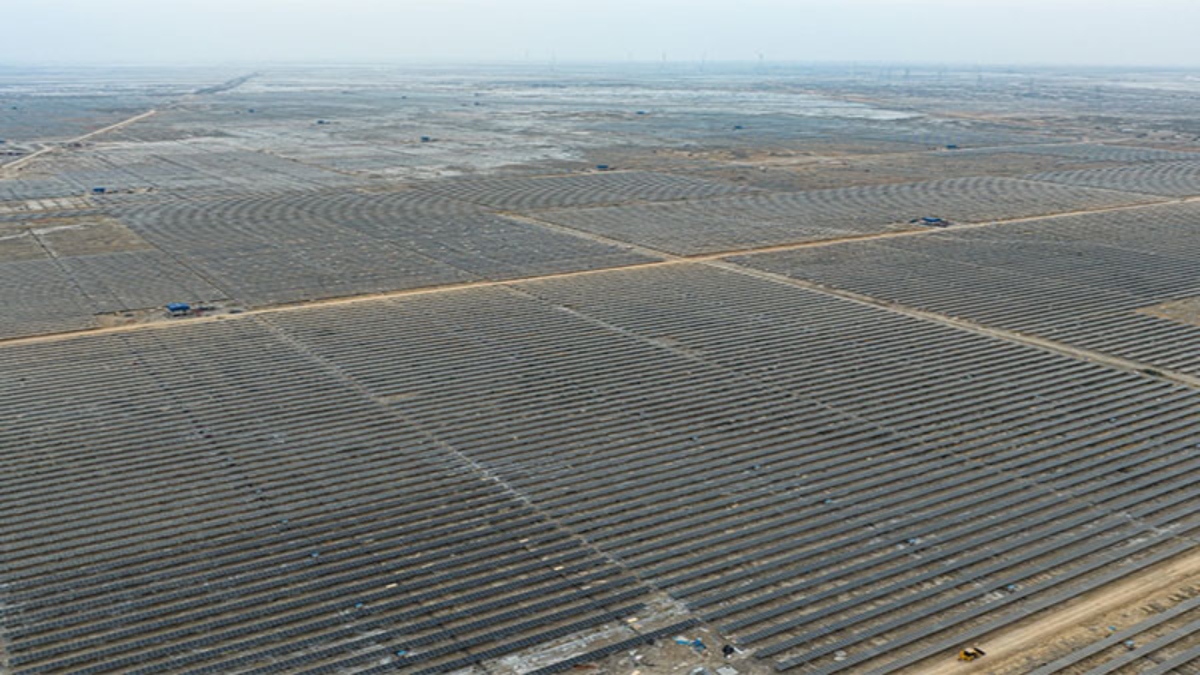
Agar sawal hai asia ka sabse bada solar plant kahan hai, to jawab hai Rajasthan ke Jodhpur district me sthit Bhadla Solar Park. Iski total capacity lagbhag 2,245 megawatt (MW) hai. Yeh project multiple phases me develop hua aur extreme desert temperature ke bawajood efficient production deta hai.

Is plant ki scale samajhne ke liye ek simple math dekhiye. Agar average ghar ko 1–2 kW load chahiye, to 2,245 MW ka matlab hai lakhon gharon ko power supply. Yani ek hi project se ek chhote rajya ki residential demand ka bada hissa cover ho sakta hai.

Psychologically dekhen to scale trust build karta hai. Jab log dekhte hain ki desert me itna bada project profitable chal raha hai, to rooftop solar me invest karne ka confidence badhta hai.

Bharat ka Sabse Bada Solar Plant

https://images.openai.com/static-rsc-3/9YxHV0tuZNVnZPbEj9V5pE_0tiH2HN4tInI3EYpWAIXVliA24iWc5UfVeWFw05U5Dr5TxD0GJMihO4d7U7TOBQlhHhQxFlES4wXuH2theZI?purpose=fullsize&v=1
https://resize.indiatvnews.com/en/resize/newbucket/1200_-/2024/06/khavda-1718036855.jpg

Aaj ke time par bharat ka sabse bada solar plant Gujarat ke Kutch district me develop ho raha hai, jise Khavda Solar Park ke naam se jaana jata hai. Iski planned capacity 30 GW tak batayi gayi hai (renewable mix including solar + wind). Yeh project global level par bhi sabse bade renewable parks me se ek maana ja raha hai.

Yeh sirf ek plant nahi, balki energy transition ka signal hai. Bharat ne 2030 tak 500 GW renewable target rakha hai. Khavda jaise mega projects is equation ka base layer hain.

Energy ko equation ki tarah dekhen:
Generation – Losses = Net Supply
Jitna bada generation base, utni stability grid me.

Solar Panel Ki Jankari

Ab basic sawal: solar panel ki jankari kya hai? Solar panel ek device hai jo sunlight ko direct current (DC) electricity me convert karta hai, photovoltaic effect ke through.

Iske main components hote hain silicon solar cells, tempered glass, EVA encapsulant, backsheet aur aluminum frame. Jab sunlight silicon par girti hai, to electrons excite hote hain aur current generate hota hai.

Solar system ke core components hote hain panel, inverter, mounting structure, DC/AC wiring aur optional battery.

Agar aap ghar ke liye solar lagana chahte hain to pehle load calculation karein. Example:
Daily consumption 10 units (kWh) hai, to roughly 3 kW ka system sufficient hota hai, depending on sunlight hours.

Yeh simple ratio hai:
Daily Units ÷ 4 = Approx kW required (India ke average 4 peak sun hours ke hisab se).

Solar Panel Kitne Watt Ka Hota Hai

Log puchte hain solar panel kitne watt ka hota hai. Market me commonly 100W, 200W, 330W, 440W, 550W tak ke panels milte hain. Rooftop residential systems me 440W ya 550W mono PERC panels zyada use hote hain.

Commercial projects me high watt bifacial modules use kiye jate hain, jo dono side se sunlight capture karte hain.

Solar Panel Ki Kimat

Ab sabse practical sawal: solar panel ki kimat kya hai?

India me rooftop solar system ki average cost 40,000 se 60,000 rupaye per kW ke beech hoti hai (subsidy se pehle).

3 kW system ki total cost lagbhag 1.5 lakh tak ho sakti hai. Subsidy ke baad effective cost kam ho jati hai.

Agar aap sirf panel kharid rahe hain, to per watt price 20–35 rupaye tak vary karta hai, brand aur technology par depend karta hai.

Yeh ek investment hai jiska ROI 4–6 saal me aa sakta hai, aur panels 25 saal tak chalte hain. Matlab long-term compounding benefit.

Sabse Sasta Solar Panel

Sabse sasta solar panel generally polycrystalline technology ka hota hai. Lekin sasta hamesha best nahi hota. Efficiency thodi kam hoti hai, to rooftop area zyada chahiye.

Decision equation simple hai:
Lower Price + Lower Efficiency = Higher Space Requirement
Higher Price + Higher Efficiency = Less Space, Better Output

Long-term me mono PERC panels better return dete hain.

Solar Panel Kaise Banate Hain

Ab technical angle: solar panel kaise banate hain.

Silicon sand ko refine karke high purity silicon banaya jata hai. Fir ingot banta hai, use thin wafers me cut kiya jata hai. Wafers ko doping process se treat karke PN junction create hota hai.

Cells ko series me solder karke panel layout banaya jata hai, upar glass aur neeche backsheet se laminate kiya jata hai. Fir aluminum frame aur junction box lagta hai.

Manufacturing me precision aur quality control critical hota hai, kyunki micro cracks performance ko impact karte hain.

India me PLI scheme ke through domestic manufacturing ko push diya ja raha hai.

Solar Panel Banane Wali Company

India me kai reputed solar panel banane wali company hain jaise Multi-Solar, Tata Power Solar aur Adani Solar.

In companies ka focus high efficiency modules, domestic supply chain aur export market par hai.

Brand selection karte waqt warranty, degradation rate aur service network check karna zaroori hai.

Pradhan Mantri Solar Yojana aur Pradhan Mantri Solar Panel Yojana

https://images.openai.com/static-rsc-3/_ldzJmcpwtrKqAMb1G6eSXLWBZLqEqcRmzFD45FzcK431Uu-JHdxV15ARjUfsXN0oAcjRau0d-d5lgfAOznu_jBGm-sZE8crCWRnz2IGxlQ?purpose=fullsize&v=1
https://pbs.twimg.com/media/Gm4whneXwAABNUE.jpg

Log commonly search karte hain pradhan mantri solar yojana ya pradhan mantri solar panel yojana. Current initiative ka naam hai PM Surya Ghar: Muft Bijli Yojana.

Is scheme ka goal hai residential rooftop solar ko promote karna aur subsidy provide karna. 3 kW tak ke systems par subsidy mil sakti hai, jo cost ka significant part cover karti hai.

Psychologically subsidy barrier ko todti hai. Jab upfront cost kam hoti hai, adoption rate exponentially badhta hai. Economics me ise demand stimulation kehte hain.

Future of Solar in India

India me solar adoption ek S-curve follow kar raha hai. Shuru me slow growth, fir rapid acceleration, aur fir maturity phase. Abhi hum acceleration phase me hain.

Electric vehicles, green hydrogen aur battery storage solar ke ecosystem ko aur strong karenge.

Agar aap marketer hain ya entrepreneur, to solar sirf product nahi, ek 25 saal ka recurring narrative hai. Energy independence emotional trigger hai. Log power cut aur high bill se frustrated hote hain. Solar unhe control ka feeling deta hai.

Solar Terminology aur Glossary

Photovoltaic Effect: Process jisme sunlight se direct electricity generate hoti hai.

DC (Direct Current): Solar panel se nikalne wali raw current.

AC (Alternating Current): Ghar me use hone wali electricity.

Inverter: Device jo DC ko AC me convert karta hai.

Mono PERC: High efficiency solar cell technology.

Polycrystalline: Older, lower cost solar technology.

Bifacial Module: Dono side se sunlight capture karta hai.

Net Metering: System jisme extra electricity grid ko bechi ja sakti hai.

kW (Kilowatt): Power capacity unit.

kWh (Kilowatt-hour): Energy consumption unit.

Degradation Rate: Har saal panel output kitna reduce hota hai.

Grid-Tied System: Battery ke bina direct grid connected system.

Off-Grid System: Battery based independent system.

CapEx vs OpEx Solar Models Explained

Solar is no longer a sustainability debate among CFOs and founders. It is an accounting choice, a working-capital choice, and sometimes even a long-term risk hedge of fluctuating energy prices. However, the biggest confusion remains at the same point: the meaning of capex, the difference between the two concepts, and why solar sellers would be so aggressive in marketing both solutions.

This article disaggregates what capex is, what opex is, and how the two solar models turn out to be in terms of their financial, operational, and strategic behavior. This is aimed at clarity, rather than sales language.

What is CapEx in the context of solar?

The acronym CapEx refers to Capital Expenditure. Capex is simply defined as money used to purchase or renovate long-term assets that give value over a period of several years in simple financial terms. A CapEx solar model, when applied to solar, implies that your company owns the solar power plant.

The initial charge is paid to install solar panels on your roof or the ground, inverters, structures, wiring, and monitoring systems. This is then recorded on your balance sheet and is depreciated according to its useful life, which is 25 years in the case of solar modules.

Capex is capitalized as opposed to expensed. The depreciation is recognized in the P&L each year and the asset is still listed on the balance sheet. Money goes by one time, dividends by hundreds.

As far as solar is concerned, CapEx solar provides control over plant design, energy output, maintenance choices, and future upgrades. It also gives access to government perks, accelerated depreciation, and tax shields, which often spearhead the majority of the financial upside.

What is OpEx in Solar?

OpEx is also known as Operating Expenditure and refers to recurrent expenses needed to operate day-to-day activities. In solar, an OpEx model typically means you do not own the plant. A third party installs, owns, operates, and maintains the solar system on your premises.

You pay only for the electricity generated, typically under a long-term Power Purchase Agreement. The tariff is cheaper than grid power and is commonly fixed or predictably escalated.

From a finance perspective, OpEx is a direct hit on the P&L. There is no asset on your balance sheet, no depreciation, and no initial capital outlay. The cash-flow impact occurs monthly or quarterly, in line with energy consumption.

OpEx solar is appealing from day one to companies that prioritize liquidity, flexibility, or asset-light models.

CapEx vs OpEx solar models: the real financial difference

The difference between capex and opex seen in headlines is ownership, but CFOs understand the distinction goes deeper into cash-flow timing, risk allocation, and return profiles.

CapEx solar is front-loaded. Cash outflow happens early, and operating expenses afterward are low. Once payback is achieved, electricity is virtually free aside from maintenance. Well-sized commercial solar projects often generate Internal Rates of Return that exceed conventional low-risk investments.

OpEx solar is back-loaded. There is no upfront investment, but savings are limited by the tariff structure. There is no zero-cost electricity phase, as payments continue throughout the contract period.

From a capex calculation standpoint, solar behaves like an inflation-protected fixed-income asset. Grid tariffs increase while solar generation remains predictable. This spread creates value.

From an opex lens, solar functions as cost arbitrage. You lock in cheaper power with no capital risk, but upside remains capped.

Accounting and balance sheet impact

Understanding capex and opex is critical because auditors, lenders, and investors interpret them differently.

CapEx solar increases fixed assets and reduces cash initially. Over time, it improves EBITDA because depreciation is excluded from EBITDA while energy cost savings are real. This makes CapEx solar attractive for companies focused on operating profitability.

OpEx solar keeps the balance sheet lighter. EBITDA impact depends on how energy expenses are classified, but there is no asset appreciation. This approach is often favored by venture-backed firms or companies close to debt covenants.

There is also an optics angle. Some founders avoid capex-intensive decisions to preserve flexibility, while others prefer asset-backed investments that strengthen enterprise value.

Risk Allocation and Control

In a CapEx model, performance risk sits with you. If the plant underperforms due to poor design or maintenance, savings decline. Vendor selection, EPC quality, and system monitoring therefore become critical.

In an OpEx model, performance risk largely sits with the developer. If generation drops, their earnings fall. This risk transfer is reflected in the tariff premium.

Control follows ownership. CapEx allows expansion, battery storage integration, and optimization of consumption patterns. OpEx contracts are restrictive by design, and changes typically require renegotiation.

Strategic considerations for CFOs and founders

CapEx vs OpEx is not about what is better. It is about what fits.

CapEx solar suits companies with stable cash flows, long-term facility ownership, and taxable profits. Accelerated depreciation and tax savings significantly enhance effective returns.

Companies with uncertain growth trajectories, leased facilities, or limited capital often choose OpEx solar. It reduces decision friction and accelerates adoption.

A hybrid reality is emerging. Some organizations start with OpEx to test operational impact and later shift to CapEx as they scale. Others mix models across sites depending on tenure and energy intensity.

CapEx Calculator and Financial Modeling

Serious decisions require modeling. A typical solar capex calculator includes system cost per kW, annual generation, degradation rate, grid tariff escalation, maintenance cost, tax rate, and depreciation benefits.

OpEx modeling focuses on tariff discount, escalation clauses, contract tenure, and opportunity cost of capital.

A common mistake is comparing only first-year savings. Solar is a long-term asset. Payback alone does not tell the full story; Net Present Value and IRR matter more.

Why Solar CapEx Is Now Considered a Financial Hedge

Energy price volatility has reshaped the discussion. Solar CapEx is no longer viewed merely as a cost but as protection against future operating risk. Locking in energy prices for 25 years stabilizes forecasting and reduces exposure to regulatory shocks.

OpEx offers partial protection within contract terms. Once contracts expire, pricing resets to market conditions.

For CFOs managing long-term cost predictability, this distinction grows more important every year.

Solar Finance & Business Terminology Used in This Blog

CapEx meaning: Capital Expenditure, money spent on long-term assets like a solar power plant.
CapEx full form: Capital Expenditure.
What is capex: Spending that creates assets delivering value over multiple years.
OpEx meaning: Operating Expenditure, recurring costs required to run operations, including energy payments.
CapEx and OpEx: Two accounting classifications that define whether spending is capitalized or expensed.
CapEx vs OpEx: A financial comparison between owning an asset versus paying for its output or service.
CapEx solar model: A solar ownership model where the company invests upfront and owns the plant.
OpEx solar model: A third-party ownership model where the company pays for power consumed.
CapEx calculation: Financial modeling to evaluate upfront investment, returns, and payback.
CapEx calculator: A tool to estimate ROI, IRR, and savings from capital investments in solar.
Power Purchase Agreement: A long-term contract under which electricity is purchased from a solar developer.
Accelerated depreciation: A tax benefit allowing faster write-off of solar assets to reduce taxable income.
Grid tariff escalation: Annual increase in utility electricity prices, a key driver of solar savings.

Understanding Industrial Load Patterns Before Solar Design

Industrial solar system design fails more often due to incorrect assumptions about electricity consumption than due to poor hardware or solar resource quality. For industrial engineers and infrastructure planners, understanding industrial load patterns before solar design is not optional; it is the foundation on which technical feasibility, financial performance, and grid compliance rest.

Unlike residential or commercial buildings, industrial power consumption is driven by physical processes rather than human behavior. Machines do not follow predictable morning and evening routines. They follow production cycles, thermal constraints, material flow dependencies, and operational bottlenecks. Designing a solar plant for an industrial facility without first conducting a rigorous industrial load analysis is equivalent to designing a bridge without knowing the traffic load.

Solar EPC engineering for industries must therefore begin with load intelligence, not module capacity.

Why Industrial Load Patterns Matter in Solar Design

Industrial solar design is fundamentally a load-matching problem. Solar generation follows a deterministic curve governed by irradiance, while industrial electricity demand is stochastic and process-dependent. When these two curves are misaligned, solar energy is wasted, system efficiency drops, and financial projections collapse.

Many industrial solar plants underperform because they are sized using monthly electricity bills or sanctioned load values. These metrics hide critical information such as intra-day demand variation, peak coincidence, ramp rates, and minimum daytime load. A factory may consume large amounts of energy annually, yet still be a poor candidate for large solar capacity if its daytime base load is low or highly variable.

Electrical load analysis for solar plants must therefore use time-series load data, ideally at 15-minute or finer resolution. This data reveals whether solar generation can be absorbed internally, whether inverter clipping will occur, and whether reverse power flow risks exist.

From an engineering logic perspective, solar design for industrial plants is not about maximizing installed kilowatts, but about maximizing usable kilowatt-hours.

Base Load, Variable Load, and Solar Compatibility

Every industrial facility has a base load and a variable load. Base load represents the minimum power required to keep the plant operational, including control systems, essential utilities, safety infrastructure, and continuous processes. Variable load fluctuates based on production schedules, batch operations, seasonal demand, and equipment duty cycles.

Solar power integration in industrial infrastructure is most effective when generation offsets stable daytime base load. If solar capacity exceeds this base load during daylight hours, excess energy will either be clipped, curtailed, or exported, often in violation of grid interconnection constraints.

Understanding base load versus variable load is central to load-based solar system sizing. It allows engineers to determine the maximum safe solar capacity that can operate without creating operational or regulatory risk.

This distinction also explains why two factories with identical monthly energy consumption may have vastly different optimal solar capacities. Load shape matters more than load magnitude.

Demand Charges and Industrial Solar Economics

Industrial electricity tariffs are dominated by demand charges, not just energy charges. Demand charges are calculated based on the highest kW or kVA drawn during the billing period and can represent a significant portion of the electricity bill.

Poorly designed industrial solar systems can fail to reduce demand charges and in some cases even increase them. If solar generation does not coincide with peak demand events, it provides little demand relief. Worse, if inverter ramp-up interacts poorly with large motor starts or process restarts, it can create new peaks.

This is why industrial energy demand analysis must include demand behavior, not just energy consumption. Load profile analysis for solar should identify when peak demand occurs, how long it lasts, and whether it aligns with solar availability.

Solar feasibility analysis that ignores demand charges is financially incomplete and often misleading.

Process-Level Load Segmentation

Industrial power consumption analysis must go beyond aggregate load curves. High-quality industrial solar feasibility studies segment load at the process or equipment level. This includes identifying which production lines operate during daylight hours, which loads are shift-based, and which processes have scheduling flexibility.

For example, utilities such as compressed air systems, cooling towers, and chilled water plants often run continuously and form a reliable solar sink. In contrast, batch processes or heavy machinery with intermittent operation may not align well with solar generation.

By mapping load to processes, engineers can identify opportunities for operational alignment, load shifting, or partial electrification that improve solar utilization without increasing installed capacity.

This is where industrial solar design becomes a collaboration between engineering and operations rather than a standalone EPC exercise.

Infrastructure Constraints and Grid Compliance

Industrial solar plant design must respect the physical and regulatory limits of existing power infrastructure. Transformer capacity, switchgear ratings, protection coordination, short-circuit levels, and utility export rules impose hard constraints on solar integration.

Without understanding load patterns, designers cannot accurately predict reverse power flow conditions, voltage rise risk, or protection malcoordination during low-load periods. Many industrial facilities operate under zero-export or limited-export agreements, making load-solar matching critical for compliance.

Solar EPC design for industries must therefore treat the solar plant as a dynamic subsystem within the larger electrical network, not as an isolated asset.

Engineering logic demands that worst-case scenarios such as maintenance shutdowns, partial production days, and seasonal demand troughs be modeled explicitly. Failure to do so shifts operational risk from the designer to the client, damaging trust and long-term performance.

Data Quality and Engineering Credibility

Expertise in industrial solar design is demonstrated through data discipline. Monthly bills, average units, or peak demand snapshots are insufficient for serious engineering. Time-series load data validated against production records and maintenance schedules is the minimum acceptable standard.

High-trust solar consultants and industrial engineers insist on data-driven solar plant design because it protects system reliability, financial outcomes, and professional credibility. This is the core of E-E-A-T in infrastructure engineering: experience reflected in methodology, expertise reflected in analysis, authority reflected in outcomes, and trust built through risk reduction.

Why Industrial Solar Projects Underperform

Industrial solar system underperformance is rarely a technology problem. It is almost always a design problem rooted in incorrect load assumptions. Oversizing, ignoring demand charges, underestimating infra constraints, and failing to model real operational behavior are the true causes of lost ROI.

Understanding industrial load patterns before solar design is not an academic exercise. It is the difference between a solar asset that quietly delivers value for 25 years and one that becomes a persistent operational liability.


Solar Terminology Used in This Blog

Industrial Load Patterns refer to the time-dependent behavior of electrical demand in industrial facilities driven by production processes rather than user behavior.

Load Profile Analysis is the study of time-series electricity consumption data to understand demand variation across hours, days, and seasons.

Base Load is the minimum continuous power required to keep an industrial facility operational regardless of production output.

Variable Load is the portion of electrical demand that fluctuates with production cycles, equipment operation, or environmental conditions.

Demand Charges are tariff components based on maximum power drawn during a billing period, independent of total energy consumed.

Self-Consumption Ratio is the percentage of solar energy generated that is consumed internally by the facility.

Reverse Power Flow occurs when on-site generation exceeds internal consumption and electricity flows back into the grid.

Transformer Capacity is the maximum apparent power a transformer can safely handle without overheating or insulation failure.

Inverter Clipping refers to the loss of potential solar generation when DC input exceeds inverter AC capacity.

Protection Coordination ensures that electrical protection devices operate in the correct sequence during faults.

Plant Load Factor measures how efficiently installed electrical capacity is utilized over time.

Residential & SME Solar Myths That Stop People from Saving Money

Most homeowners and small businesses do not install rooftop solar not because of technology failure, but because a few persistent myths and behavioural biases continue to portray solar as riskier or less profitable than it actually is. The result is lost savings.

Rooftop solar capacity in India has increased by nearly ten times over the past five years, growing from around 1 GW to almost 12 GW by 2024. However, a very small portion of this capacity is residential. This gap exists largely because perceptions around cost, reliability, and operational hassle do not align with the available evidence.

Myth: Solar only works in very sunny locations and will not work on cloudy days

Fact: Solar panels generate electricity using sunlight, not heat. As a result, they can produce usable power even when the sky is overcast. While panels do experience reduced output during cloudy weather, modern photovoltaic systems are capable of generating meaningful energy from diffuse light.

This distinction matters because households and SMEs often overestimate weather-related risk and undervalue expected annual generation. Industry capacity-factor data and system simulations consistently show that realistic local irradiation data, rather than anecdotes about a few cloudy days, determines long-term performance and payback.

Myth: Solar systems are extremely costly and have unpredictable payback

Reality: Over the past few years, solar costs have fallen significantly, and policy subsidies have made payback periods much shorter for many users.

Studies examining residential rooftop solar in India suggest that with subsidy support and a five-year payback threshold, residential rooftop potential could rise to approximately 32 GW. This indicates that once capital support or financing is available, a large number of households become economically viable solar adopters.

For SMEs, rooftop potential is even higher. Commercial payback periods are often more attractive due to longer operating hours and higher electricity tariffs, which translate into greater savings per unit generated.

Understanding payback through simple math

Consider an SME installing a 10 kW rooftop solar system that generates 1,200 kWh per kW per year, or 12,000 kWh annually. If the average grid tariff is ₹7 per kWh, annual savings equal:

12,000 × ₹7 = ₹84,000 per year

If the post-incentive system installation cost is ₹4,50,000, the payback period is:

₹4,50,000 ÷ ₹84,000 ≈ 5.4 years

This is straightforward arithmetic. Actual results depend on accurate irradiation data, local tariffs, financing costs, and system losses, but the calculation illustrates how quickly rooftop solar can recover its cost.

In practice, some city-level programs report annual savings of approximately ₹86,400 for a 10 kW system, which closely aligns with this estimate.

Myth: Solar is expensive to maintain or damages roofs

Reality: Modern solar installations require minimal maintenance, typically limited to periodic panel cleaning and occasional inverter checks.

When installed correctly, rooftop systems preserve structural integrity. Reputable installers design systems that comply with roofing warranties and building load limits. However, many potential adopters fixate on rare worst-case scenarios and use them as a reason to delay action.

From a behavioural perspective, this is an example of availability bias, where dramatic but uncommon incidents are remembered more vividly and perceived risk is exaggerated.

Myth: Solar will keep working during power cuts

Fact: Most grid-tied solar systems without battery storage automatically shut down during grid outages to ensure safety.

To maintain power during outages, a battery and hybrid inverter are required. While this increases system cost, the correct system design depends on intent. Those focused purely on bill reduction may not need backup, while users prioritising blackout resilience should account for storage when selecting their system architecture.

Behavioural barriers behind under-adoption

Technical misconceptions are only part of the problem. Behavioural factors play an equally important role in slowing adoption.

The first is present bias, where people heavily weight immediate costs over future benefits, even when lifetime savings are substantial. The second is loss aversion, where potential inconveniences feel larger than equivalent financial gains. The third is information overload and choice paralysis, caused by conflicting vendor quotes, complex product specifications, and unclear subsidy processes, which often lead buyers to postpone decisions.

Recent qualitative research on Indian households links low awareness and perceived procedural friction directly to slower rooftop solar adoption.

Closing the adoption gap

Both market and policy interventions can reduce friction. Public schemes that streamline subsidy disbursement, standardise quotations, introduce simple payback calculators, and offer low-documentation financing significantly lower cognitive and financial barriers.

City and state pilot programs show measurable savings and faster adoption when upfront costs and paperwork are reduced. In one recent program that enabled more than 10,000 rooftop connections, estimated annual customer savings reached approximately ₹160 crore. Aggregate figures like these help residential communities and SME owners clearly see the economic case.

Why SMEs have an advantage

SMEs often benefit from larger rooftops and higher daytime electricity consumption, resulting in faster payback periods and higher internal rates of return. Despite this, adoption remains low.

Industry projections estimate SME rooftop solar potential in the tens of gigawatts, far exceeding current installations. This gap represents an arbitrage opportunity for business owners who can overcome behavioural barriers and access sensible financing.

Evidence-based decision steps

An informed decision starts with calculating a local generation estimate based on roof orientation and average tariff. Next, payback should be assessed using conservative production assumptions. System comparisons should focus on warranty terms, actual energy output guarantees, inverter specifications, and financing structure. Finally, applicable incentives and net-metering policies should be factored in.

This approach replaces emotional noise with numbers, which is where profitability becomes clear.

Final perspective

Solar is not magic. It is predictable physics combined with straightforward finance. The main obstacle today is not sunlight, but human behaviour: fear of uncertainty, preference for immediate comfort, and the mental effort required to evaluate choices.

Once these barriers are addressed, the numbers speak for themselves through multi-year payback, lower electricity bills, and, in many cases, positive cash flow.

Future of Solar in India: What Buyers Should Prepare For

In India, solar energy has passed through the initial adoption levels. It has become an element of the planning of the energy and infrastructure of the country. Whether in the utility-scale array of solar parks or in industrial rooftops, whether in community planning requirements or in corporate sustainability objectives, solar energy is being viewed more as long-term infrastructure, not as an optional source of energy.

Planners and buyers will need to go beyond numbers of installation capacity when determining the future of solar power in India. It demands a clear understanding of how the forces of technology, policy, grid integration, and workforce dynamics are co-evolving. The inquiry currently is not what will the future of solar energy in India look like, but whether or not the consumers are ready to how the future will actually work on the ground.

It is not much to argue that solar energy will be bright in India. The difficulty is in implementation, system development, and performance management over the long run.

Solar Is Transitioning From Projects to Infrastructure

During the initial stages of adoption, solar was treated as an activity that was project-oriented. Buyers were concerned with initial price, installation schedules, and brief payback. It is no longer a sufficient approach.

The future solar environment assumes solar resources to be 25-year infrastructure. This transformation alters the buyer assessment of technology, contracts, and risk. The procurement decisions now focus on long-term generation forecasting, behavior of inverters during degradation, replacement cycles of inverters, and the availability of the grid.

Such regions as Gujarat are a good example of this development. Industrial clusters linked with future solar Vadodara and future solar Karjan do not need to be confined to rooftop solar installations only. They are observing combined solar systems attached to manufacturing plants, logistics parks, and energy-intensive processes, in which the reliability is more important than the expense.

Technology Direction: More Than Basic Solar Panels

Increasing the wattage is not the only feature of future solar panels. Purchasers are focusing more on efficiency in high temperatures, working with both sides, degradation behavior, and integration with tracking systems. The question of solar energy relies on the performance of the technology with time, and not necessarily on the first day.

The inverters are also becoming smarter and can support grid functions, remote diagnostics, and improved management of energy yield. These modifications make solar systems more complex and more resilient.

To the planners, this implies that the solar energy prospect in India has a close relationship with digital infrastructure, monitoring, and informed decision-making.

Policy Reality and Grid Integration

The grid interaction is also a defining characteristic of increasing solar penetration. The nature of solar generation is intermittent, and this places more emphasis on forecasting, scheduling, and grid-balancing processes.

Evacuation infrastructure, substation capacity, and curtailment risk are now issues that buyers must consider during the project planning process. The future solar energy ecosystem rewards those who plan for grid constraints early rather than those who respond after deployment.

Policy frameworks continue to evolve. Regulations around open access, group captive structures, and scheduling requirements are changing consistently. While these policies support growth, they also increase compliance complexity. Buyers who understand regulatory direction are better positioned to build flexible solar portfolios.

Solar as a Strategic Planning Input

Solar is influencing how industrial structures, commercial buildings, and urban developments are planned. Energy planning is now integrated with land use, building orientation, load profiling, and future electrification strategies.

For planners, solar is no longer a retrofit. It is a design parameter. This is particularly relevant in industrial areas where competitiveness is directly linked to energy costs. The future adoption of solar energy is therefore closely tied to broader infrastructure decision-making.

The Evolving Landscape of Solar Careers

The development of solar infrastructure is reshaping the workforce. The future of solar careers is shifting away from strictly installation-focused roles toward system design, performance optimization, asset management, and regulatory compliance.

Cross-disciplinary engineers, planners, and analysts are becoming increasingly important. This reflects the broader transformation of solar into a long-term infrastructure asset class. Organizations that invest early in relevant talent are better positioned to scale sustainably.

The Preparations That Buyers Need to Make

Buyers planning the future of solar in India must adopt lifecycle thinking rather than short-term profitability. This includes realistic evaluation of warranties, planning for component replacement, and understanding long-term operational costs.

Contract structures, performance guarantees, and risk allocation mechanisms are becoming as critical as technology selection. Future-ready solar procurement means assessing how systems will perform under policy shifts, grid evolution, and climate stress over multiple decades.

Those who position themselves strategically will benefit most from the long-term growth trajectory of solar.

The Future of Solar in India Is Structural

Economic viability, policy alignment, and energy security needs strongly support the solar energy future in India. Unlike transitional technologies, solar is being embedded into national planning frameworks across power, transport, industry, and urban development.

This makes the role of solar durable rather than cyclical. Such longevity rewards serious preparation, better system design, and long-term planning by both planners and buyers.

The future of solar energy in India is not driven by novelty, but by its alignment with the direction in which the country is moving.

Solar and Infrastructure Terms Used in This Blog

Solar Energy
Electric current derived using photovoltaic or solar thermal systems that convert sunlight into usable power.

Future Solar Panels
Advanced photovoltaic modules developed for higher efficiency, better high-temperature performance, and lower long-term degradation.

EPC (Engineering, Procurement, and Construction)
A delivery model in which a single contractor designs, sources, and constructs the entire solar project.

Grid Evacuation
The infrastructure used to transmit generated solar power from the plant to the electricity grid.

Inverter
A device that converts DC electricity produced by solar panels into AC electricity for grid or consumer use.

Degradation Rate
The annual percentage loss in energy output of solar panels over their operational lifespan.

Bifacial Modules
Solar panels capable of generating power from both front and rear surfaces using reflected sunlight.

Open Access Solar
A framework that allows consumers to procure electricity directly from solar power producers.

Group Captive Solar
A shared ownership model in which multiple consumers invest in and consume electricity from a single solar plant.

Curtailment Risk
The risk of solar power generation being reduced due to grid limitations or regulatory constraints.

Solar Energy Future in India
The long-term role of solar power within India’s national energy and infrastructure planning strategy.